VNIIFTRI modernizes key state primary standards in accordance with the redefinition of units at the 26th General Conference on Weights and Measures
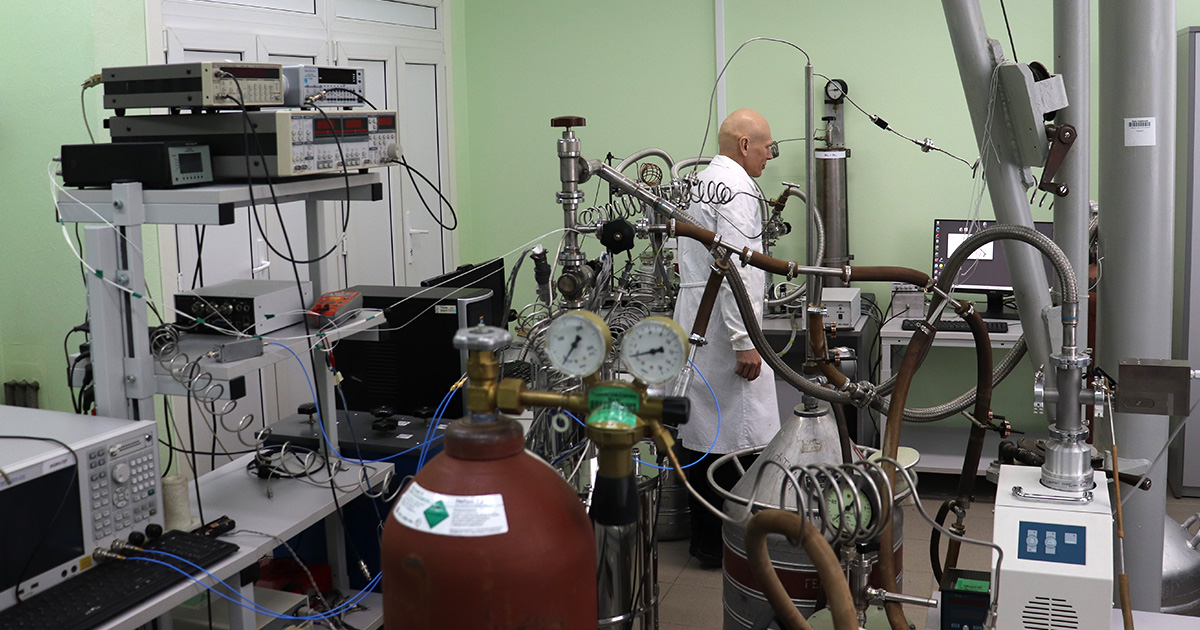
Moscow Region, February 6, 2026 - On the eve of Science Day, the Federal Agency for Technical Regulating and Metrology (Rosstandart) approved 7 State primary standards with new characteristics, upgraded in 2025 at FSUE “VNIIFTRI”. The improved standards relate to such measurement fields as physical and chemical, electromagnetic, temperature and radio engineering measurements. Some of the new state verification schemes with new measurement capabilities of the standards will come into operation on February 10, 2026.
"Rosstandart's continuous work on improving the reference base makes it possible to increase the accuracy of standards, as well as expand their metrological capabilities. This is especially important against the background of the constant growth of requirements to the accuracy of measurements and emergence of innovative methods in areas where the slightest errors can have a significant impact on the development of innovation and optimization of technological processes in leading sectors of the economy. Thus, this allows us to maintain not only competitiveness, but also to set new benchmarks for the entire industry," noted Anton Shalaev, head of Rosstandart.
One of the key results of the modernization of the standards was the unique characteristics of the State Primary Standard for the unit of temperature, kelvin, in the range from 0.3 to 273.16 K (GET 35-2026) and the State Primary Standard for the ion activity pX indexes and mass (atomic) fraction of deuterium in a liquid (GET 171-2026).
During the modernization of GET 35, noise thermometry equipment was included in its composition, which made it possible to reproduce the temperature unit over the entire temperature range of the standard using primary methods in accordance with the current definition of the unit of temperature, kelvin, based on a fixed value of the Boltzmann constant, which was adopted at the 26th meeting of the General Conference on Weights and Measures. Previously, only the contact thermometry method was used to reproduce the temperature unit in the range from 0.3 to 4.2 K.
Measurements in the field of ultra-low temperatures are important for ensuring the operation of quantum computers, in space research, rocket fuel cooling, gas transportation, as well as in medicine.
GET 35 regularly participates in international comparisons, demonstrating its measuring capabilities at the level of leading foreign metrological institutes. Regular comparisons between laboratories make it possible to confirm the high accuracy of the standard, as well as integrate the Russian reference base into the international system and ensure mutual recognition of standards.
The State Primary Standard for the pX indexes of ion activity and mass (atomic) fraction of deuterium in a liquid (GET 171-2026) allows reproducing, storing and transmitting the activity index of deuterium ions in a liquid in the range of the pD scale from 1.2 to 7.0, units of the mass fraction of deuterium in a liquid in the range from 0.016 to 49.9% and units of the atomic fraction of deuterium in the range from 0.014 to 47.3%. The modernization of the standard made it possible to expand the measurement range for determining the pD activity of deuterium ions and the atomic molar fraction of deuterium in a liquid. This will make it possible to develop reference materials (RM) of domestic production and increase Russia's technological sovereignty in this field of measurements.
"The improvement of this standard allows ensuring the uniformity of measurements in critically important sectors of the Russian industry, primarily in nuclear energy technologies; nuclear fuel cycle based on heavy-water reactors; safe handling of radioactive sources and spent nuclear fuel, where the determination of the hydrogen index in heavy water is very important. GET 171-2026 is also in demand in biomedicine and veterinary medicine, where biological processes are being studied using isotope labeling methods and new technologies and renewable energy sources, including hydrogen energy," noted Sergey Prokunin, Deputy Head of the Scientific Research Department of Physical and Chemical and Electrical Measurements for scientific work, scientist and keeper of the state standard.
Based on the results of improving the standard, reference materials will be developed and produced at VNIIFTRI based on heavy water with a high content of deuterium in various concentration ranges for metrological support of enterprises and nuclear power plants using heavy-water reactors. In the future, it is planned to create working standards for the activity of deuterium ions for the metrological support of the pD range from 1 to 7, which is especially in demand in the biomedical and nuclear industries.


Спасибо! Заказ успешно отправлен.